

close
Choose Your Site
Global
Social Media
Views: 134 Author: Site Editor Publish Time: 2026-07-18 Origin: Site


Industrial fluid management involves incredibly high stakes. Process downtime, inefficient flow rates, and sudden equipment failure directly destroy operational profitability. You simply cannot afford unplanned mechanical interruptions when handling critical media. To maintain peak productivity, facilities require robust, precise, and unyielding pumping solutions. We define High Pressure Triplex Pumps as advanced positive displacement units. They utilize three synchronized plungers operating in a strict sequence. This specific mechanical configuration delivers continuous, low-pulsation fluid transfer at extreme pressures. Our guide bridges the knowledge gap between core mechanical principles and strategic procurement decisions. We carefully analyze performance data, outline key operational risks, and detail strict vendor evaluation criteria. You will learn exactly how to align equipment specifications to your demanding field conditions.
Triplex pump architecture significantly reduces fluid pulsation compared to simplex or duplex designs, extending system longevity.
Performance remains highly consistent across variable flow rates, making them optimal for strict high-pressure industrial applications (e.g., reverse osmosis, hydrostatic testing).
Long-term ROI is heavily dependent on mitigating implementation risks like cavitation and managing wear parts (packing, valves).
Selecting a qualified High Pressure Triplex Pumps manufacturer requires evaluating API/ISO compliance, material customization, and after-sales infrastructure.
Understanding the internal mechanics helps you optimize daily operations. These machines rely on precise timing and rugged geometry to move challenging fluids.
Three plungers sit on a single heavy-duty crankshaft. Engineers offset these plungers by exactly 120 degrees. This specific angular geometry creates an overlapping pumping cycle. As one plunger finishes pushing fluid, the next one has already begun its forward stroke. It structurally neutralizes dramatic flow spikes inherent in simpler designs. You experience significantly reduced mechanical vibration across your entire piping network. Smoother operation directly translates into fewer pipe fractures, longer seal life, and reduced maintenance intervals.
The mechanical process relies on two distinct and continuous strokes per cylinder. They happen hundreds of times every minute.
Suction Stroke: The plunger retracts backward from the fluid chamber. This movement creates a localized pressure drop inside the cylinder. External fluid pressure forces the inlet valves open. The internal cavity fills rapidly.
Discharge Stroke: The crankshaft pushes the plunger forward into the chamber. The inlet valve shuts tightly to prevent backflow. Rapidly rising internal pressure forces the fluid out through the discharge valves and directly into your main system.
Positive displacement designs trap a highly specific fluid volume inside the cylinder. They move this exact amount during every single crankshaft rotation. The downstream discharge pressure does not change this output volume. Your facility gains incredibly predictable and stable flow rates. Centrifugal models often struggle and lose flow against high resistance. Triplex units excel under these harsh conditions. We see maximum volumetric efficiency because internal slip remains incredibly minimal. You get exactly the flow rate you engineered the system to produce.
Selecting the right fluid transfer technology prevents catastrophic failures. We must compare structural strengths to understand why triplex units dominate high-pressure sectors.
Centrifugal pumps dominate general, low-pressure fluid transfer tasks. However, their efficiency drops sharply at high pressures or lower flow rates. Fluid simply spins inside the casing without moving forward efficiently. Triplex models maintain excellent efficiency under these exact restricted conditions. You get a completely flat performance curve. If your process requires steady flow against massive backpressure, the positive displacement design wins easily.
Simplex (one cylinder) and duplex (two cylinders) pumps create massive pressure spikes during their cycles. These violent spikes cause destructive pulsation. The three-cylinder triplex design overlaps strokes perfectly. It reduces fluid pulsation by over 50% compared to duplex alternatives. You eliminate the need for excessively large, expensive dampeners. Your facility suffers far less pipe fatigue and foundation vibration damage over time.
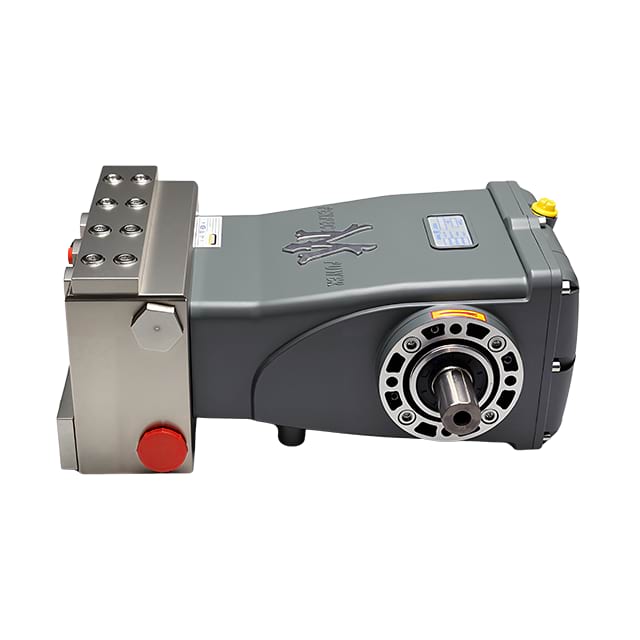
Abrasive or highly corrosive media demand specialized internal materials. Standard fluid-end blocks often use forged stainless steel for clean water. More aggressive industrial liquids require duplex alloys or nickel-aluminum bronze. Engineers rely on these heavy-duty metallurgies to guarantee continuous 24/7 duty capabilities. High thermal tolerance allows the equipment to process hot fluids without seizing the plungers.
Pump Technology | Pressure Capability | Flow Consistency vs. Pressure | Pulsation Level |
|---|---|---|---|
Triplex Positive Displacement | Extremely High (Up to 30,000+ PSI) | Excellent (Volume remains fixed) | Low to Moderate (Overlapping strokes) |
Centrifugal | Low to Medium | Poor (Flow drops as pressure rises) | Very Low (Smooth spinning action) |
Duplex Positive Displacement | High | Excellent (Volume remains fixed) | High (Requires massive dampeners) |
We must match mechanical specifications to actual field conditions. These robust machines serve multiple demanding sectors. Integrating High Pressure Triplex Pumps into these demanding sectors solves complex fluid delivery challenges.
Safety and precision drive the petrochemical sector. Operators use these units heavily for chemical injection, glycol pumping, and hydrostatic pressure testing. Hydrostatic testing requires absolute pressure stability to verify pipeline integrity before commissioning. You cannot allow pressure drops during a test phase. Furthermore, hazardous environments demand strict API compliance and zero-leakage packing configurations to protect site personnel.
Industrial cleaning requires incredible kinetic energy at the nozzle. These machines easily deliver pressures exceeding 10,000 PSI. Maintenance crews use them for aggressive paint removal, heat exchanger tube cleaning, and even concrete demolition. The continuous, focused flow blasts away stubborn scale. It does this rapidly without damaging the underlying steel substrates.
Clean water production relies on extreme, unwavering pressure. Facilities must force dense seawater through exceptionally fine semi-permeable membranes. This process demands constant high pressure to overcome natural osmotic resistance. A reliable High Pressure Triplex Pumps manufacturer prioritizes energy-efficient designs here. Highly efficient pumping blocks contribute directly to reduced power consumption in massive municipal desalination plants.
Every mechanical system carries inherent operational risks. Acknowledging these realities upfront allows you to design better piping networks and schedule smarter maintenance routines.
Cavitation represents the single biggest threat to positive displacement equipment. You must provide adequate Net Positive Suction Head Available (NPSHa). If inlet feed pressure drops too low, the fluid literally boils. Vapor bubbles form inside the fluid block. These tiny bubbles implode violently during the high-pressure discharge stroke. The resulting microscopic shockwaves physically tear solid metal away from your fluid-end blocks. Proper booster pumps and correctly sized suction lines prevent this extremely costly damage.
Keep suction piping as short and straight as possible.
Ensure the suction pipe diameter is at least one size larger than the pump inlet port.
Never use globe valves on the suction side; use full-port ball or gate valves instead.
We must state a transparent mechanical reality here. Triplex designs significantly reduce fluid pulsation, but they never eliminate it entirely. A baseline ripple always exists in the fluid flow. Critical piping networks still require targeted pulsation management. You should install properly charged suction and discharge dampeners. These devices absorb residual pressure spikes. They protect delicate downstream instruments, flow meters, and pipe joints from fatigue cracking.
You need realistic expectations for preventative maintenance. High-pressure friction eventually degrades internal moving components.
Plunger Packing: Requires regular visual inspection and periodic replacement to prevent hazardous external leaks.
Ceramic Coatings: Plungers coated in ceramic resist wear brilliantly but can crack if subjected to extreme thermal shock.
Valve Seats: Abrasive particles eventually wear down the metal seats. They lose their tight seal, which immediately reduces volumetric efficiency.
Consistent vibration monitoring and scheduled teardowns ensure you replace these parts before a catastrophic failure occurs.
Your procurement choice dictates operational success for the next decade. Do not evaluate vendors solely on initial capital outlay. You must assess their engineering depth and post-installation support network.
Standard off-the-shelf equipment rarely fits specialized industrial tasks perfectly. Look for vendors who actively modify their standard designs. A competent High Pressure Triplex Pumps manufacturer will customize fluid-end blocks and select highly specific plunger materials based on your fluid analysis. They expertly adapt drive systems, motors, and skid bases to match your unique site footprint and exact media viscosity.
You must verify strict adherence to global engineering standards. API 674 dictates rigorous design, safety, and testing rules for positive displacement pumps in heavy industry. ISO 9001 certification proves consistent, repeatable manufacturing quality. Always request documented Factory Acceptance Testing (FAT). This critical testing phase proves the assembled unit actually hits your exact pressure and flow metrics before it ever leaves the factory floor.
Heavy capital equipment requires reliable, long-term backing. Assess the vendor's ability to provide rapid lifecycle support. Check their standing inventory for critical spare parts like valves, proprietary packing rings, and plungers. Review their published service manuals for clarity and transparency. Localized technical support teams ensure you receive immediate troubleshooting guidance during sudden operational emergencies. Fast support minimizes your facility's unplanned downtime drastically.
High Pressure Triplex Pumps operate as highly precise, heavily engineered industrial assets. Their three-cylinder structural design offers unmatched volumetric efficiency and significantly reduced fluid pulsation compared to older technologies. However, upfront specification accuracy ultimately dictates their long-term viability in the field. Ignoring inlet feed conditions or neglecting pulsation dampeners will destroy even the best equipment quickly.
We strongly encourage engineers and technical procurement teams to map their exact system requirements proactively. Calculate your available NPSH carefully. Define your specific fluid characteristics, including exact viscosity, temperature, and abrasiveness. Outline your expected daily duty cycles. Once you gather this critical technical data, request detailed performance spec sheets or book a direct technical consultation with your shortlisted manufacturer.
A: Pressure limits depend heavily on the specific fluid-end design, chosen metallurgy, and plunger bore size. Standard industrial units routinely operate between 5,000 and 15,000 PSI. Highly specialized configurations built for extreme applications, like ultra-high-pressure water jetting, can safely handle pressures exceeding 30,000 PSI.
A: This is an absolute critical safety requirement. Positive displacement pumps trap and move a fixed volume of fluid regardless of downstream resistance. If the discharge line becomes blocked, the pump continues building pressure indefinitely. Eventually, the piping, casing, or drive mechanism will violently rupture. A relief valve safely redirects this pressure.
A: No, running these units dry causes severe, rapid mechanical damage. The pumped fluid acts as a crucial lubricant and cooling agent for the internal moving components. Operating without fluid generates extreme friction. This intense heat quickly destroys the plunger packing, the internal seals, and eventually scores the plungers.


