

close
Choose Your Site
Global
Social Media
Views: 125 Author: Site Editor Publish Time: 2026-09-14 Origin: Site


Framing the PSI versus GPM debate requires looking at a critical capital allocation decision. You are not just choosing a technical specification. Choosing the wrong configuration directly impacts your daily operations. It affects job completion times, labor costs, and equipment lifespan. You must get this balance right.
Inside a closed pipe, pressure (PSI) and flow (GPM) interact uniquely. Surface cleaning heavily relies on pressure to blast dirt away. However, cleaning underground pipes operates on entirely different hydraulic principles. You cannot treat a pipe like a flat concrete driveway. You need water to carry debris away, not just blast it into smaller pieces.
We introduce an evidence-based framework for evaluating your equipment specifications. You will learn to match these specifications based on pipe diameter. We cover primary blockage types and practical operational constraints. This ensures you invest in the correct machinery. It helps you tackle your actual daily workload efficiently.
GPM drives propulsion and flushing: Flow rate determines the jetter hose's ability to pull itself down the line and carry heavy debris (grease, sand, rocks) back to the cleanout.
PSI dictates cutting power: High pressure is reserved for slicing through structural blockages (tree roots, mineral scale, ice).
The Pipe Diameter Rule: GPM requirements scale linearly with pipe size; insufficient GPM in a large pipe renders high PSI useless.
System limitations matter: High-GPM units require adequate water buffer tanks to prevent pump cavitation.
A severe mismatch in equipment specifications ruins operational efficiency. Operators frequently encounter soft blockages like grease or sludge. A low-GPM, high-PSI machine struggles against these materials. The nozzle blasts through the sludge easily. However, it lacks the water volume to wash the sludge away.
Operators experience endless "yo-yoing" inside the pipe. They pass the nozzle back and forth through the blockage. The debris simply resettles behind the hose. This frustrating process doubles your time on site. You waste valuable labor hours repeating the same ineffective passes.
Excessive PSI also creates severe equipment liability. You face immense risks when cleaning older, compromised clay or PVC lines. Extreme pressure easily shatters fragile pipe walls. This causes pipe bursting and massive structural damage. Contractors face expensive lawsuits and repair bills when they destroy customer property.
Buyers often fall into the "paper specs" trap. Marketing brochures highlight massive PSI numbers. These numbers look incredibly impressive on paper. However, you must avoid buying based solely on these flashy figures. You need to match the equipment to specific commercial or municipal applications. High pressure means nothing if it destroys the pipe. You must evaluate the actual working conditions before buying.
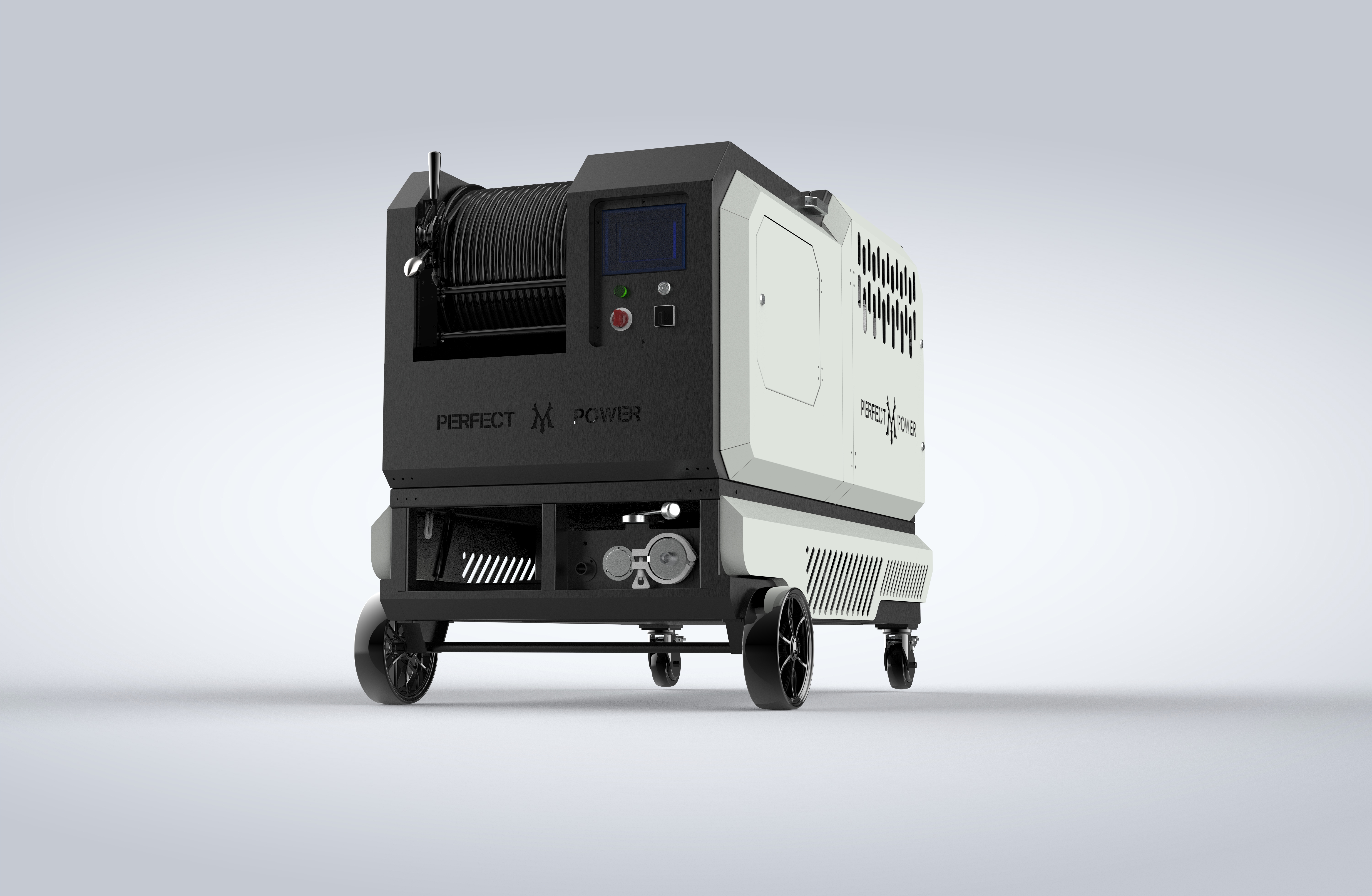
Flow rate acts as the true engine of debris removal. High volume creates the crucial "river effect" inside a pipe. You need this heavy current to suspend emulsified grease. The flowing water transports silt, rocks, and heavy solids. It carries all this material back to the cleanout. Without sufficient GPM, the debris simply drops back to the bottom.
Physics governs how your nozzle moves underground. Higher GPM provides the essential rear thrust. Rear-facing jets push water backward to propel the nozzle forward. You need massive water volume to create this thrust. This energy pulls heavy hoses hundreds of feet down the line. A low-flow machine cannot drag a heavy hose very far.
Effective Sewer Jetting requires precise flow rate calculations. Industry standards dictate a very simple sizing baseline. You generally require roughly one GPM per inch of pipe diameter. This rule ensures effective clearing.
A 4-inch pipe requires at least 4 GPM for proper flushing.
A 6-inch pipe demands a minimum of 6 GPM.
An 8-inch pipe needs 8 GPM or more to move solids.
You cannot cheat this physics rule. Insufficient flow in a large pipe leaves debris sitting stagnant. The water simply trickles over the sludge. You must size your water volume to the pipe diameter.
While flow moves material, pressure serves a very distinct purpose. PSI acts as a dedicated cutting force. It takes precedence in highly specific application scenarios. You rely on high pressure to cut dense tree root intrusions. It works exceptionally well for descaling rough cast iron pipes. You also need it to slice through severe ice blockages.
In these scenarios, pressure acts like a sharp blade. It powers rotating nozzles and chain flails. However, pushing past 4,000 PSI yields diminishing returns for standard cleaning. Most municipal blockages consist of grease, rags, and mud. Extreme pressure does not clear these materials any faster. Instead, it shifts your risk profile heavily toward catastrophic pipe damage.
You must also understand friction loss realities. The actual PSI at your nozzle drops significantly during operation. Hose length and inner diameter create massive water friction. A long run eats up your pressure quickly. You might need a high starting PSI at the pump. This simply ensures you deliver adequate working pressure 300 feet away.
For example, you might generate 4,000 PSI at the machine. Friction loss could reduce this to just 2,500 PSI at the nozzle. Operators must account for this drop when setting up long hose runs. You must monitor your gauges carefully.
The industry uses a standard formula to measure overall machine power. You multiply PSI by GPM to calculate Cleaning Units (CU). Manufacturers love advertising this total number. It gives buyers a quick way to gauge raw performance. Surface cleaners rely heavily on this metric.
However, this mathematical formula contains a massive flaw for pipe cleaning. CU can be highly misleading in this specific context. Two machines can have identical CU ratings but perform completely differently underground. Let us look at a practical example.
Table: Cleaning Units (CU) Comparison in Sewer Applications
Machine Spec | Calculated CU | Primary Strengths | Ideal Pipe Size |
|---|---|---|---|
4,000 PSI / 4 GPM | 16,000 CU | Root cutting, descaling walls | 2 to 4 inches |
2,000 PSI / 8 GPM | 16,000 CU | Flushing heavy sludge, sand | 4 to 8 inches |
3,000 PSI / 12 GPM | 36,000 CU | Municipal clearing, massive flow | 8 to 12 inches |
The 4,000 PSI machine and the 2,000 PSI machine both produce 16,000 CU. Yet, the 8 GPM unit remains vastly superior for a 6-inch municipal sewer line. The high-flow machine actually flushes the debris out. The high-pressure machine just pokes holes in the sludge.
We highly recommend using CU strictly as an evaluation lens. Use it only to compare machines within the exact same class. Do not use it as your primary purchasing criterion. Always look at the individual flow and pressure numbers first.
You must match your equipment specifications to your actual target workload. Different environments require vastly different machine setups. Buying one massive machine for every job rarely works. You need the right tool for the specific environment.
Residential and light commercial jobs typically involve 2-inch to 4-inch lines. You should focus on machines producing 3,000 to 4,000 PSI. You only need 4 to 8 GPM for these jobs. This configuration proves ideal for grease, hair, and soft blockages. It navigates tight access areas and residential cleanouts perfectly.
Heavy commercial and municipal jobs present bigger challenges. These environments feature 6-inch to 12-inch main lines. Here, you must focus on 2,000 to 3,000 PSI. You will need 12 to 40+ GPM. This massive volume handles high-volume flushing easily. It removes heavy sand and silt during long-run operations.
Integrating reliable equipment changes your business entirely. Standardizing on properly spec'd machinery like PERFECT POWER ensures consistent daily performance. It drastically reduces expensive pump downtime. It allows operators to confidently match power outputs to specific job requirements. You can trust your equipment to finish the job safely.
PERFECT POWER develops a range of high-pressure cleaning equipment and pump solutions for different sewer and industrial cleaning requirements, including fuel-powered sewer jetters, electric jetting systems, high-flow cleaning equipment, and high-pressure plunger pumps.
The company also provides customized solutions when standard equipment specifications do not fully match a customer's operating conditions. Technical consultation and adaptable engineering design allow pressure, flow, equipment configuration, and application requirements to be considered together, helping customers select a more suitable system instead of simply choosing the highest PSI available.

Before purchasing your next machine, you must perform three critical operational checks. These steps prevent expensive buying mistakes. They ensure your new equipment actually works in the field.
Water Supply Logistics: Address the critical risk of water starvation. Pumps destroy themselves when they run dry. If you select a 12+ GPM machine, calculate the necessary buffer tank size carefully. A standard garden hose only supplies about 5 GPM. You will need a large onboard tank or municipal hydrant access to sustain continuous operation.
Nozzle Compatibility: Emphasize this simple truth to your operators. Machine specifications remain only as effective as the nozzle attached. A mismatch between the pump's flow rating and the nozzle orifices destroys efficiency. A 12 GPM pump pushing through a 4 GPM nozzle creates massive backpressure. It ruins the pump and kills your cleaning power.
Scalability: Evaluate the machine's control systems. Does it allow for adjustable unloaders? Can you use bypass valves? You need the ability to dial down pressure for delicate jobs. You must protect old clay pipes while maintaining necessary water flow. Flexible controls make a machine truly versatile.
Skipping these operational checks leads to buyer's remorse. You must understand your logistics before bringing a high-capacity machine to a job site.
For the vast majority of daily applications, GPM remains your primary driver of efficiency. Flow rate physically moves debris out of the pipe. PSI serves strictly as a secondary metric for specialized root cutting and descaling. High pressure without high flow simply rearranges the dirt inside the pipe.
We encourage buyers to audit their most common job types immediately. Document your most frequent pipe sizes. Record your most common blockage types. Finalize your equipment specs based only on this hard data. Consult with technical specialists to configure your ideal setup before spending capital.
A: Yes, excessive pressure can destroy older clay, Orangeburg, or deteriorating PVC pipes. Water acts like a blade at high pressures. Pushing beyond 4,000 PSI on fragile lines significantly increases the risk of structural collapse and flooding.
A: Yes, pushing high GPM through a narrow hose creates extreme friction loss and potential hose failure. You must match the inner diameter to your flow rate. A 3/8-inch hose handles 4-8 GPM, while 1/2-inch or larger is needed for 12+ GPM.
A: Friction loss depends on hose length, inner diameter, and your GPM. As water travels, it rubs against the hose walls. Pushing 8 GPM through 300 feet of narrow hose can reduce your nozzle pressure by several hundred PSI.
A: Pressure washers rely on surface impact force to blast dirt vertically. Drains require volumetric flushing to move heavy debris horizontally down a pipe. A pressure washer lacks the GPM needed to create the "river effect" that carries solids away.


