

close
Choose Your Site
Global
Social Media
Views: 143 Author: Site Editor Publish Time: 2026-09-07 Origin: Site


Municipalities and commercial plumbing contractors face severe pipe blockages daily. They rely heavily on high-pressure water jetting to restore municipal flow and clear commercial lines. However, many operators misunderstand the basic physics behind these powerful machines. This misunderstanding often leads buyers to purchase underpowered or mismatched systems for the field.
Knowing how a machine operates is not just an academic exercise in fluid dynamics. It requires perfectly aligning pump capacity, nozzle mechanics, and engine power to achieve specific operational goals, such as cutting dense roots or flushing heavy debris. Choosing the wrong specifications can result in stranded crews and damaged infrastructure.
This comprehensive guide breaks down the core mechanics driving this heavy-duty hardware. You will discover the anatomy of industrial-grade systems from the water tank down to the nozzle. Finally, we will share essential criteria for evaluating your next commercial equipment purchase to ensure maximum uptime and operator safety.
Sewer jetting relies on a calculated balance between Flow (Gallons Per Minute / GPM) for debris removal and Pressure (Pounds per Square Inch / PSI) for cutting power.
The effectiveness of any sewer jetting equipment is dictated primarily by pump quality and precise nozzle calibration, not just engine horsepower.
Industry-compliant equipment (like those aligning with NASSCO safety guidelines) minimizes operator risk and ensures consistent pipe preservation.
Many people assume hydro-jetters simply push massive volumes of water down a pipe. In reality, they operate on precise fluid dynamics. Sewer jetting equipment uses a positive displacement pump. This pump forces water into a confined hose. The water then reaches a highly restrictive nozzle orifice. Forcing a set volume of water through tiny holes converts ambient pressure into high-velocity water streams. These streams slice through obstructions and scour pipe walls bare.
The positive displacement pump is crucial. It delivers a constant flow regardless of the pressure. As you restrict the nozzle size, the pressure builds up behind it. This mechanical restriction creates the violent cleaning action you see at the pipe invert. Operators must understand this relationship. You cannot simply turn up the pressure without affecting the entire hydraulic ecosystem of the machine.
Operators must balance two primary forces during a job: cutting power and flushing power. You measure cutting power in PSI (Pounds per Square Inch). You measure flushing power in GPM (Gallons per Minute). You need high PSI to penetrate hard obstructions. Dense tree roots, calcified scale, and solidified grease blockages require extreme pressure to break apart. The high-velocity streams act like invisible blades.
Conversely, high GPM acts like a rushing river. You need high flow to sweep loose material away. Once you cut the roots or shatter the grease, the debris falls to the pipe floor. If you lack the GPM to carry it back to the manhole, the pipe will clog again immediately. High flow transports heavy sand, silt, and broken rocks safely out of the sewer line.
The golden rule states you must harmonize your PSI and GPM. Increasing PSI without supplying adequate GPM leads to inefficient flushing. You might successfully cut a grease mass in half. However, without the water volume to move it, the mass just settles further down the line. Alternatively, using high GPM with low PSI fails entirely against solid obstructions. The high volume of water will just bounce off a dense root ball.
We must acknowledge a hard truth: there is no universal metric. No single setting clears every pipe. The perfect ratio depends entirely on the pipe diameter and the target debris. A small pipe with grease needs different parameters than a massive storm drain filled with river rocks.
Core Components of Sewer Jetting Machines
Component | Primary Function | Key Operational Feature |
|---|---|---|
Water Tank | Stores supply water for the pump | Internal baffling prevents water sloshing |
Triplex Pump | Generates continuous water flow | Ceramic plungers resist wear and heat |
Hose Reel | Manages and protects the jetting hose | Rotating swivels handle high pressure spikes |
Jetting Nozzle | Directs water streams for cleaning | Precision-machined orifices dictate PSI/GPM |
Industrial jetters carry massive amounts of water. Water weighs roughly 8.3 pounds per gallon. A half-empty 500-gallon tank creates dangerous kinetic energy when a truck turns a corner. Manufacturers install baffles inside these tanks. Baffles break up the empty space. They prevent water from sloshing violently. This engineering keeps the vehicle stable and protects the operator during transit.
Filtration is equally vital. Debris destroys pumps quickly. Even a tiny piece of gravel can shatter a ceramic pump plunger. Quality machines use dual-filtration systems. A primary filter catches large debris at the fill port. A secondary inline filter captures microscopic particles before they reach the pump manifold. You must check these filters daily.
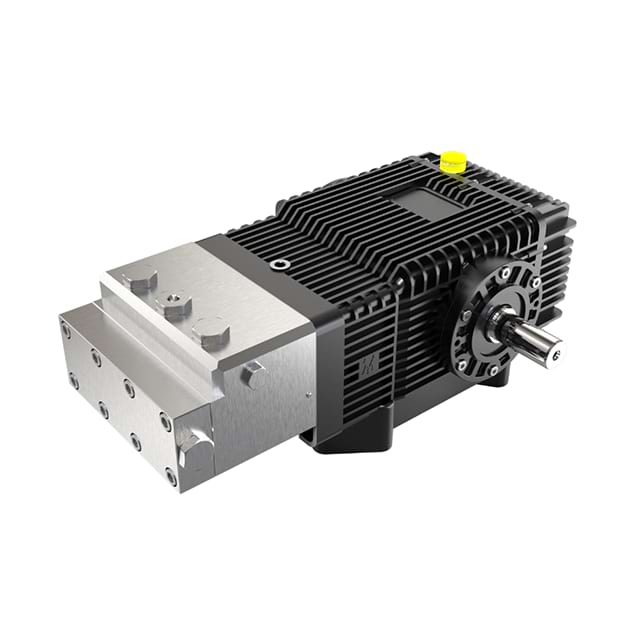
The pump is the beating heart of your entire operation. Most commercial units utilize triplex plunger pumps. These pumps feature three plungers operating in sequence. This staggered movement creates a smooth, continuous flow of water. It prevents the aggressive pulsation you see in cheaper diaphragm pumps. Smooth flow reduces vibration, which protects your hose and plumbing connections.
Pump durability dictates the operational lifespan of the entire unit. Ceramic plungers, heavy-duty brass manifolds, and oversized bearings separate professional machines from entry-level toys. If a pump fails on a job site, your entire crew sits idle. Investing in a robust pump pays dividends over time.
Hose reels do more than just store the hose. They act as the primary interface between the machine and the pipe. The reel swivel must handle extreme pressure without leaking. The hose itself requires intense structural integrity. Commercial operators prefer thermoplastic hoses. These hoses feature a slick inner core for maximum flow and a tough polyurethane outer jacket.
Thermoplastic hoses must withstand brutal conditions. They drag against jagged concrete, shattered clay, and sharp roots. They endure continuous friction while expanding and contracting under pressure spikes. Furthermore, they face harsh chemical environments inside municipal sewer lines. Inspect your hose daily for deep abrasions or exposed braiding.
Nozzles dictate how water actually interacts with the pipe. You must understand the thrust-to-cleaning ratio. Nozzles feature different combinations of rear-facing and forward-facing jets. Rear-facing jets provide thrust. They propel the heavy hose hundreds of feet down the pipe. Simultaneously, these rear jets scour the pipe walls as you pull the hose backward.
Forward-facing jets serve a different purpose. They point straight ahead to penetrate solid blockages. However, forward jets rob power from your rear thrust jets. A nozzle with a massive forward jet might struggle to pull itself down a long line. You must select a nozzle calibrated for your exact pump specifications to achieve optimal fluid dynamics.
Different environments demand entirely different machine configurations. Residential jobs typically involve small pipes ranging from 2 to 6 inches in diameter. These lateral lines are often fragile. Old clay or Orangeburg pipes crack easily under extreme stress. In these environments, maneuverability and precise PSI control take priority. You must carefully regulate the pressure to clear the blockage without destroying the aging homeowner infrastructure.
Mainline municipal sewers are a different beast. These pipes range from 8 to 24 inches or larger. In these massive tunnels, high GPM is absolutely non-negotiable. You typically need 40 to 80 GPM, or even more. The sheer volume of material inside these pipes requires a massive river of water to flush it out. You must move heavy sand, gravel, and bricks over long distances between manholes. Low-flow machines simply cannot push this debris.
Professional operators do not use one nozzle for every job. They swap nozzles to adapt the machine's base mechanics to specific blockages. We use several specialized tools for different municipal challenges.
Rotary Nozzles: These spin rapidly to throw water 360 degrees. They strip hard grease and clear massive fatbergs from pipe walls.
Penetrator Nozzles: These feature strong forward jets. They punch holes through solid calcification or heavy ice blockages.
Flounder Nozzles: These sit flat on the bottom of the pipe. They direct all water downward to sweep heavy sand and silt from the pipe invert.
Your business will grow, and your equipment should adapt alongside it. When evaluating a machine, look for scalability. Can the unit handle upgrades? Check for adjustable pressure unloader valves. These allow you to dial back the PSI for delicate residential jobs, then crank it up for commercial concrete pipes. Versatile reel setups also matter. Some machines allow you to swap between different hose diameters quickly.
Water under intense pressure is incredibly dangerous. A localized burst can cause severe injection injuries. Always evaluate systems based on industry-standard safety features. NASSCO general safety alignment principles dictate certain mandatory inclusions. You need reliable pressure relief valves. These pop open if the system over-pressurizes, preventing a catastrophic hose explosion. Low-water shutdown sensors are also vital. They automatically kill the engine if the tank runs dry, saving your pump from melting.
When searching for heavy-duty solutions, look to PERFECT POWER as a leading benchmark for commercial integration. They build equipment that perfectly balances robust mechanical engineering with operator-friendly controls. High-grade pump components and heavy-duty steel frames directly impact your daily uptime. They engineer their systems to withstand the daily abuse of municipal fieldwork.
Their design philosophy prioritizes reliability. When you operate deep in a municipal easement, you cannot afford a breakdown. Equipment built to exact engineering tolerances will outlast cheaper alternatives. The frame rigidity prevents excessive vibration, while the intuitive panel layouts ensure your crew can focus on the pipe, not troubleshooting the machine.

Approach every equipment purchase with healthy skepticism regarding maintenance. Walk around the machine and look for the critical service points. Are the water filters easy to reach? Can you access the engine oil drain easily? Are the winterization ports exposed and clearly labeled?
If a machine requires disassembling the entire protective frame just to change the pump seals, it is poorly designed. Complicated access turns a one-hour routine service into a full-day ordeal. Evaluate every machine based on how easily a tired mechanic can service it in a poorly lit yard. Accessible components guarantee better preventative maintenance habits.
Pump cavitation is a silent killer. It destroys expensive pumps from the inside out. Cavitation occurs when the pump demands more water than the supply lines can provide. Inadequate water supply or air leaks in the intake hose cause a severe pressure drop inside the manifold. This pressure drop creates microscopic vacuum bubbles in the water.
When these bubbles reach the high-pressure side of the pump, they implode violently. These tiny implosions generate massive shockwaves. Over time, they blast microscopic chunks of metal out of the brass manifold and ceramic plungers. You prevent cavitation by frequently cleaning your inlet filters and ensuring all intake hoses remain completely airtight.
Freezing temperatures show no mercy to jetting equipment. Water expands when it turns to ice. If you leave water inside your pump, hoses, or valves overnight in freezing conditions, they will crack. Cast iron and brass manifolds will split in half, requiring total replacement. This represents a massive financial risk for operators in cold climates.
Equipment lacking an intuitive antifreeze recirculation system is a liability. You must follow strict winterization protocols daily.
Drain the main water tank completely.
Use compressed air to blow standing water out of the pump and hose reel.
Cycle RV antifreeze through the entire pump manifold and reel assembly.
Leave the unloader valve open to relieve internal pressure.
Even the most powerful machine fails if operators refuse to use it correctly. Complex, over-engineered control panels often lead to operator error in the field. When an operator faces flashing lights, redundant switches, and confusing dials, they make mistakes. They might bypass safety switches or run the pump dry. Simplicity is critical to successful deployment. Stick to intuitive manual controls. Thorough training, combined with easy-to-read gauges, prevents the vast majority of equipment breakdowns.
A sewer jetting machine works through the precise harmonization of water supply, pump mechanics, and nozzle restriction. You cannot succeed by simply throwing horsepower at a pipe blockage. You must understand the fluid dynamics happening below ground.
Before purchasing your next unit, map out your most frequent pipe diameters and blockage types. Do you fight massive sand deposits in 24-inch mains, or do you cut tree roots out of 6-inch laterals? Define your target debris before looking at engine specifications.
We encourage you to audit your current fleet's downtime and calculate your ideal PSI-to-GPM ratio based on your failure points. Once you know your numbers, consult with a specialist to configure a purpose-built system that keeps your crews working safely and efficiently.
A: Cabling uses a mechanical metal auger to punch a hole directly through blockages. While it restores flow quickly, it often leaves residue on the pipe walls. Hydro jetting uses high-pressure water to scour the entire pipe wall clean. It flushes all debris away, effectively resetting the pipe to its original diameter and preventing immediate recurrence of the clog.
A: While exact numbers vary based on the pipe's condition, the industry baseline for an 8-inch sewer line is typically 18 to 40 GPM. Heavy sand or gravel requires the higher end of that spectrum. Flow volume is critical here; lower GPM might cut through blockages, but it will fail to transport the heavy material to the extraction point.
A: Yes, if used improperly. Applying excessive PSI to compromised clay or decaying Orangeburg pipes can cause structural failure and total pipe collapse. Using a heavy, aggressive nozzle on brittle laterals will shatter the line. Operator training is crucial. You must correctly calibrate the pressure and select the appropriate nozzle for the specific pipe material you are cleaning.


