

close
Choose Your Site
Global
Social Media
Views: 137 Author: Site Editor Publish Time: 2026-09-10 Origin: Site


Many buyers obsess over maximum pressure ratings when shopping for line-clearing equipment. They often think more power equals better results. However, focusing solely on peak PSI can lead to disastrous consequences for your business. Over-pressurizing fragile lines risks catastrophic pipe damage and massive liability claims. Conversely, under-pressurizing destroys job profitability. It wastes hours of valuable labor on stubborn blockages. You must shift your focus from seeking the highest pressure to finding the right balance. What is the optimal mix of PSI and Gallons Per Minute for your specific service calls? We will explore the critical relationship between pressure and flow volume in this guide. You will discover how different pipe materials dictate your equipment settings. Finally, this guide provides an evidence-based framework to help you specify the right commercial machine. You can maximize operational ROI while minimizing on-site risks.
Standard Ranges: Commercial sewer jetting generally requires between 2,000 and 4,000 PSI, depending on the blockage type and pipe diameter.
The GPM Factor: PSI cuts through blockages, but flow (GPM) is what actually flushes the debris away. High PSI with low GPM is ineffective for line clearing.
Material Limits: Older clay or compromised PVC pipes cannot withstand the same pressure as heavy-duty cast iron; variable pressure control is mandatory.
Purpose-Built vs. Retrofits: Converting standard pressure washers into jetters lacks critical features like pulsation control, limiting commercial viability.
Operators frequently misunderstand how high-pressure water clears underground lines. They look at the pump gauge and assume a high number guarantees success. In reality, effective line clearing relies on a delicate mathematical balance. You need both pressure and volume to restore flow. A properly specified sewer jetter perfectly harmonizes these two distinct forces.
Let us define the core variables dictating your machine's performance:
PSI (Pounds per Square Inch): This metric represents your cutting force. High pressure is essential for slicing through invasive tree roots. It also obliterates hardened grease banks and strips calcified scaling from pipe walls.
GPM (Gallons Per Minute): This metric represents your flushing force. Volume is essential for carrying the scoured debris down the line. It also provides the vital thrust needed to propel the cleaning nozzle forward through long pipe runs.
We must address the common "Max PSI" fallacy. Imagine running a 4,000 PSI machine producing only 2 GPM inside a 6-inch main line. The water stream will slice through the grease block easily. However, the system fails immediately afterward. Two gallons of water per minute simply lack the physical mass to push heavy debris down a wide pipe. The cut sludge stops moving, settles, and causes an immediate re-clog. You end up right back where you started.
Industry professionals rely on a proven rule of thumb to prevent this scenario. You should generally match one GPM for every inch of pipe diameter. A 4-inch pipe requires at least 4 GPM for adequate flushing. A 6-inch pipe requires 6 GPM. Evaluating machine specifications against this ratio prevents you from buying equipment incapable of finishing the job.
Applying uniform pressure across all service calls is a dangerous practice. Underground infrastructure varies wildly in age, material, and structural integrity. A seasoned operator always assesses the environment before engaging the pump. They adjust their settings based on strict material thresholds.
Different materials tolerate different kinetic impacts. Exceeding these thresholds can turn a routine maintenance call into an expensive excavation project. You must understand the limits of the pipes you service.
Table 1: Safe Pressure Thresholds by Pipe Material
Pipe Material | Recommended Max PSI | Risk Factors & Operational Notes |
|---|---|---|
PVC and Modern Plastics | 3,000 - 4,000 PSI | Susceptible to scoring or wall piercing if a high-degree nozzle remains stationary. Keep the nozzle moving continuously. |
Orangeburg and Older Clay | 1,500 - 2,000 PSI | Extremely fragile and prone to crumbling. Use lower pressure and higher flow volume to gently flush these systems. |
Cast Iron and Industrial | 4,000+ PSI | Highly durable. Operators can safely utilize peak pressures for heavy descaling and severe root mass removal. |
Modern PVC systems are common but require careful handling. They generally cap out safely around 3,000 to 4,000 PSI. Exceeding this limit, or letting a high-pressure jet sit in one spot, will score the plastic wall. Orangeburg pipe and older clay systems present high-risk environments. These materials degrade over decades underground. They demand much lower pressure limits, typically hovering between 1,500 and 2,000 PSI. Conversely, heavy-duty cast iron can handle extreme force. You can safely ramp up your equipment to 4,000 PSI to strip away years of mineral buildup.
You must also tailor your pressure output to the specific type of blockage. Soft blockages include sludge, loose grease, and mud. These do not require maximum cutting force. Instead, they require low pressure and high flow volume. The goal is to wash the slurry away quickly.
Hard blockages demand a completely different approach. Tree roots, ice, and heavy mineral deposits require aggressive tactics. You will need high pressure, typically between 3,500 and 4,000 PSI. You must also pair this high pressure with specialized rotary cutting nozzles. The intense stream acts as a fluid blade, shredding the solid mass into manageable pieces before the flow carries them away.
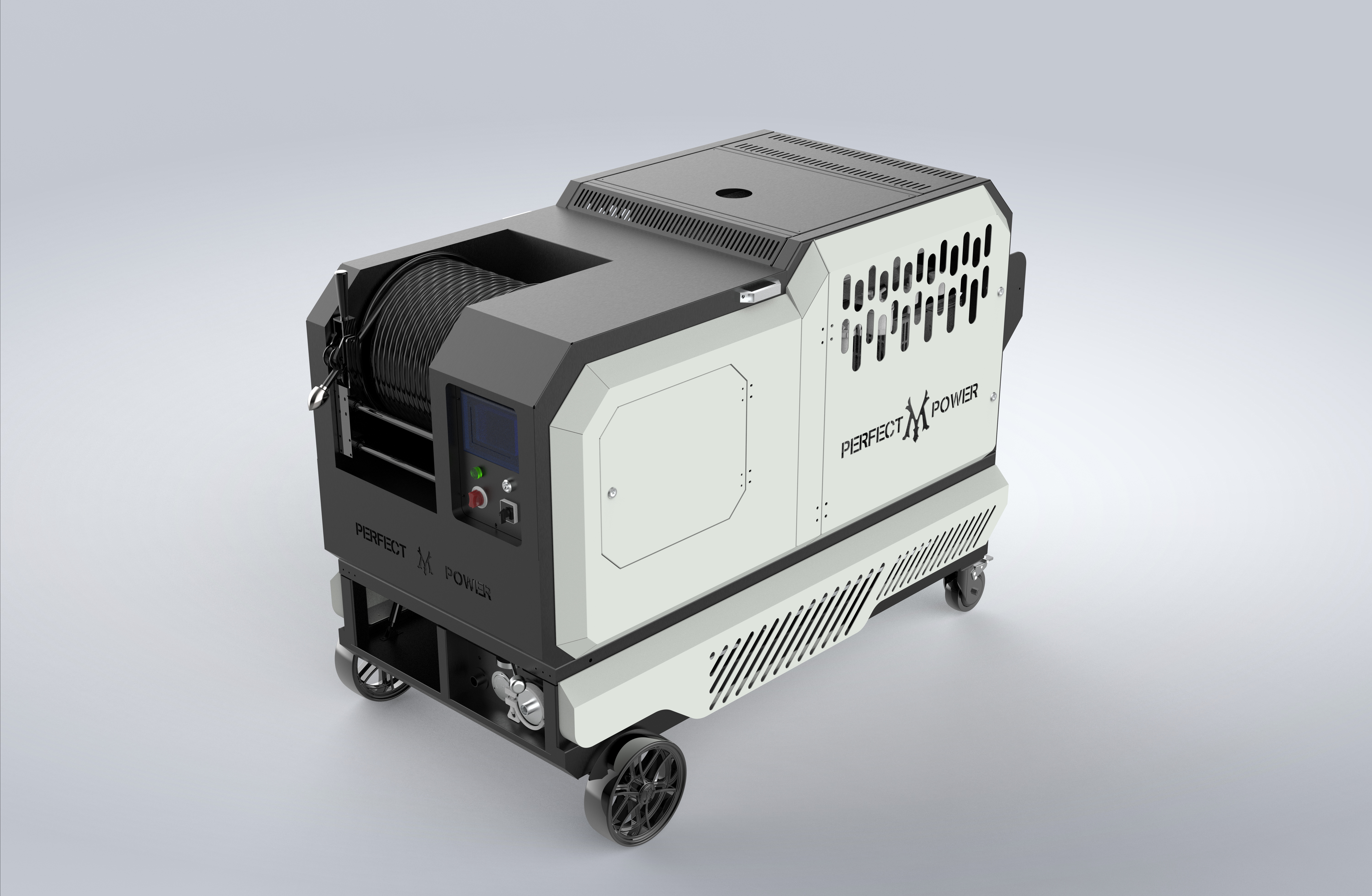
Many contractors look for ways to cut capital expenses. They often fall prey to a very common shortcut. They buy a specialty hose, attach a specialized nozzle, and hook it up to a standard surface pressure washer. This DIY approach seems brilliant on paper. However, it routinely fails in real-world commercial environments.
The primary issue involves missing hardware. Purpose-built line clearing machines contain a critical component called a pulsation valve. Surface washing pumps do not have this feature. The pulsation valve intentionally disrupts the water flow for a fraction of a second. This rapid disruption sends intense vibrations down the entire length of the hose. These vibrations break the friction between the hose jacket and the pipe wall. They allow the nozzle to effortlessly navigate tight bends, elbows, and exceptionally long lateral runs.
Without a pulsation valve, a standard hose simply gets stuck. It cannot slide past aggressive corners. You end up fighting the equipment instead of cleaning the line.
Furthermore, standard pressure washers face severe pump burnout risks. Manufacturers design surface washers for intermittent trigger use. They do not engineer them for continuous, max-pressure lateral pipe runs. Running a standard pump at peak capacity for an hour straight generates excessive heat. This stress destroys the internal seals and ceramic plungers. The resulting equipment failure leads to immediate job-site downtime. A broken pump on a residential driveway costs you daily revenue and damages your professional reputation.
Investing in commercial-grade equipment requires careful due diligence. You cannot simply buy the unit displaying the highest numbers on the spec sheet. You must evaluate the hardware components ensuring daily reliability. E-E-A-T principles dictate examining the machine from an engineering and operational perspective.
Consider these non-negotiable features when evaluating your next purchase:
Adjustable Unloader Valves: Precision control is vital for service fleets. An adjustable unloader valve allows the operator to dial down the pressure seamlessly. You need this flexibility when transitioning from a commercial cast-iron main to a fragile residential clay lateral.
Engine and Pump Pairing: The heart of your machine determines its lifespan. Look for heavy-duty V-twin engines paired with high-quality triplex plunger pumps. Triplex pumps run cooler and handle continuous duty cycles far better than cheaper axial wobble pumps.
Nozzle Compatibility: A powerful pump is useless without the right end-tool. Ensure the machine produces enough GPM to drive advanced root-cutting flail nozzles and heavy-duty flappers. These tools require substantial water volume to spin effectively.
Finally, you must evaluate vendor reliability. You need a supply chain partner standing behind their hardware. Integrating systems from trusted manufacturers like PERFECT POWER ensures sustained performance in the field. Reliable vendors provide accurate ratings and predictable maintenance schedules. They also supply readily available replacement parts, keeping your trucks on the road.

PERFECT POWER approaches sewer jetting equipment from both the pump and complete-system perspective. Its product portfolio includes high-pressure plunger pumps, high-pressure E-Jetters, fuel-powered jetters, and customized cleaning solutions, allowing equipment configurations to be adapted to different pressure, flow, and application requirements.
Beyond equipment manufacturing, PERFECT POWER provides technical consultation and adaptable engineering design. This helps customers evaluate their actual operating conditions and select a high-pressure cleaning system that matches their pipe sizes, cleaning requirements, working environment, and expected duty cycle.
Structuring your service fleet requires matching your equipment to your typical customer base. Business owners constantly debate between redundancy and versatility. Do you need one massive trailer-mounted unit, or should you deploy multiple cart-mounted units across several trucks?
A massive trailer unit provides extreme pressure and incredible flow. It dominates commercial and municipal jobs. However, trailer units struggle in tight-access residential areas. You cannot easily drag a heavy hose through a narrow backyard gate. Conversely, cart-mounted units offer incredible versatility. Technicians can roll them directly to the cleanout. They handle 90% of standard residential calls efficiently. Many successful fleets utilize a hybrid approach. They deploy cart units for daily residential calls and keep a trailer unit on standby for heavy commercial contracts.
You must also analyze your payback period accurately. Buying a properly specified machine radically transforms your daily operations. A perfectly balanced system reduces your time-on-site dramatically. Technicians clear stubborn roots in twenty minutes instead of two hours. This efficiency increases the daily job capacity of your service truck. You can book an extra call every afternoon. Furthermore, having adjustable pressure controls limits liability claims from blown pipes. Avoiding one catastrophic residential flood easily pays for the premium equipment upgrade.
Your next step involves a thorough internal audit. Review your last fifty service calls before engaging a supplier. Determine your most common pipe diameters. Identify your most frequent blockage types. This data explicitly dictates your exact volume and pressure requirements. You can then approach vendors with clear, evidence-based specifications.
Specifying line clearing equipment is a crucial operational decision. It requires finding the optimal intersection of pressure, flow volume, and material safety. You must stop chasing the highest gauge reading and start prioritizing the correct engineering balance. Proper flow flushes debris effectively, while adjustable pressure protects fragile infrastructure.
Your immediate next step is auditing your current service territory. Map out the most common pipe diameters and blockage types your technicians encounter weekly. Use this real-world data to finalize your specific flow and pressure requirements. Only then should you request a formal quote from a reputable equipment manufacturer.
A: Generally, no. While 1,500 PSI might clear minor hair roots, it lacks the kinetic force for serious intrusion. Mature root masses typically require 3,000–4,000 PSI combined with a specialized rotary cutting nozzle to slice the timber effectively.
A: Yes, if operated incorrectly. Sustained pressure over 4,000 PSI can compromise the structural integrity of modern plastics. Letting a high-pressure nozzle sit stationary in one spot can easily score or blow directly through PVC pipe walls.
A: A minimum of 4 GPM is standard, following the industry rule of 1 GPM per inch of pipe diameter. However, utilizing 5 to 8 GPM is optimal for thorough debris flushing without overloading the drainage system.
A: No. Operating constantly at peak PSI severely stresses the pump and increases the risk of underground pipe damage. Operators should always adjust their pressure based on the specific blockage type and the age of the pipe material.


