

close
Choose Your Site
Global
Social Media
Views: 0 Author: Site Editor Publish Time: 2026-09-27 Origin: Site


Upgrading a high-pressure fluid system demands a careful balance between initial equipment costs and long-term mechanical reliability. Your choice of pump geometry directly impacts piping fatigue, routine maintenance intervals, and overall operational efficiency. When fluid dynamics are ignored, facilities face frequent breakdowns and excessive parts replacement.
The central engineering challenge in positive displacement pumping involves managing intense flow pulsation and mitigating mechanical wear. Ignoring the underlying kinematics of pump design often leads to catastrophic line failures, aggressive cavitation, and costly downtime. Engineers must understand how plunger phase offsets dictate system stress.
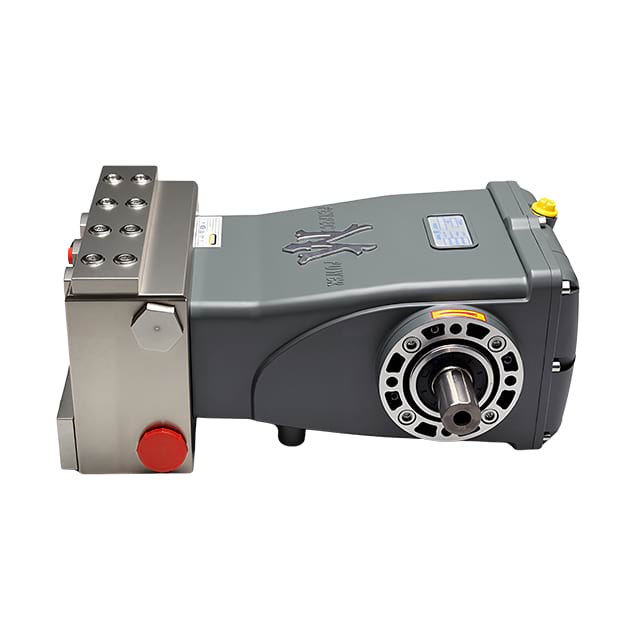
Both configurations serve critical roles when you need a robust High-Pressure Plunger Pump. However, their distinct mechanical designs dictate entirely different field applications. We will break down the engineering mechanics, performance metrics, and application suitability needed for a confident procurement decision.
Pulsation Management: Triplex plunger pumps generate significantly smoother flow (approx. 23% flow variation) compared to duplex pumps (approx. 45%), reducing stress on downstream components.
Duty Cycle Suitability: A triplex design is the industry standard for a continuous-duty plunger pump, whereas duplex models are often reserved for intermittent use or specific heavy-slurry applications.
Application Overlap: Selecting the right industrial pump requires evaluating specific NPSHr (Net Positive Suction Head required), fluid viscosity, and site footprint limitations.
To make an informed decision, you must first understand the fundamental kinematics driving positive displacement equipment. The arrangement of internal components entirely dictates how fluid exits the discharge manifold. Every stroke creates a specific flow profile, which translates directly into downstream pressure behavior.
A duplex design features two cylinders operating in tandem. Plungers connect to a crankshaft utilizing a 180-degree phase offset. When one plunger reaches the end of its forward discharge stroke, the other is just beginning.
This opposing geometry results in distinct peaks and valleys in fluid delivery. Because the flow drops drastically between strokes, the system experiences severe pressure spikes. Operators commonly must install robust, heavy-duty pulsation dampeners to absorb this violent mechanical energy. Without these accessories, the violent hammer effect can fracture downstream pipe welds.
The triplex configuration houses three cylinders. These plungers connect to a crankshaft forged with 120-degree phase offsets. This specific engineering choice mathematically overlaps the discharge strokes.
Before one plunger finishes pushing fluid, the next plunger has already begun its discharge cycle. This continuous overlap creates a significantly smoother, near-continuous flow profile. While this geometry requires more internal components—including extra valves, packing seals, and plungers—it distributes the mechanical load much more evenly across the crankshaft and bearings.
Feature | Duplex Configuration | Triplex Configuration |
|---|---|---|
Number of Cylinders | Two | Three |
Crankshaft Phase Offset | 180 degrees | 120 degrees |
Flow Profile | High pulsation, distinct peaks/valleys | Smooth, mathematically overlapping strokes |
Component Complexity | Fewer moving parts | More internal valves and seals |
Mechanical Load Distribution | Concentrated, uneven stress | Evenly distributed across bearings |
Beyond basic mechanics, evaluating performance requires a deep dive into fluid dynamics. Flow characteristics directly influence system longevity. When specifying a triplex plunger pump, engineers prioritize volumetric efficiency and vibration reduction.
Volumetric efficiency measures how effectively a pump moves fluid against high head pressures without internal leakage. High pressure naturally forces fluid to slip backward past valves and packing seals if they are not seated perfectly. Triplex designs minimize this internal slip. Because the discharge strokes overlap, the pressure differential across internal valves remains more stable. This stability allows valves to seat faster and tighter, maintaining exceptionally high efficiency even at elevated operating pressures.
You cannot ignore the destructive potential of fluid pulsation. Duplex pressure spikes act like a continuous hammer striking your pipe joints, mechanical seals, and sensitive instrumentation. Over time, this intense vibration leads to material fatigue and sudden line ruptures.
Triplex models inherently reduce this destructive energy. The 120-degree phase offset drops the flow variation down to approximately 23%. Consequently, triplex models require smaller, less expensive dampening accessories. The reduced vibration protects downstream filtration membranes, heat exchangers, and flow meters from premature failure.
What to watch out for: Never assume a triplex system runs entirely without pulsation. Always specify appropriately sized dampeners to protect digital instrumentation, even if the structural piping does not technically require them.
Power transmission introduces another critical performance metric. The overlapping power strokes in a triplex design demand a highly uniform torque input from the electric motor or diesel engine. This smooth torque demand reduces electrical amperage spikes.
Conversely, a duplex setup creates a jerky, aggressive torque demand. The motor must constantly surge to push fluid during peak strokes, then unload during the valleys. This electrical surging heats up motor windings and significantly reduces motor lifespan. Smooth power consumption ultimately translates to lower electrical overhead and extended drive component longevity.
Evaluating your pump selection requires analyzing upfront acquisition costs against ongoing operational requirements. Mechanical simplicity often competes directly with long-term durability.
A duplex plunger pump generally demands a lower initial capital expenditure. The reasoning is straightforward: the equipment features fewer machined parts. Manufacturing a two-cylinder block is inherently less expensive than casting and machining a three-cylinder block. Buyers save money on the initial purchase order because they are buying fewer plungers, connecting rods, and valves.
Ongoing operational expenditure presents a different reality. You must factor in regular maintenance schedules and wear parts.
Wear Parts: Triplex designs possess 50% more valves and packings. During a standard overhaul, maintenance teams must replace three sets of consumable seals instead of two. This increases direct parts costs during routine servicing.
System Wear: However, you must look beyond the pump block. The severe pulsation generated by duplex pumps accelerates wear across the entire fluid delivery network. Facilities often spend more money repairing cracked pipe supports and replacing damaged gauges than they save on pump wear parts.
Field maintenance environments dictate equipment choice heavily. Duplex pumps are mechanically simpler. They provide plenty of physical space to swing heavy wrenches, making them ideal for rugged, on-site repairs in harsh environments like oilfield mud pits.
Triplex designs require slightly more precise maintenance scheduling and cleaner repair conditions. The internal clearances are tighter, and the components sit closer together. However, because the mechanical load is distributed evenly, triplex units offer a significantly longer Mean Time Between Failures (MTBF). They run smoothly for extended periods, making them highly dependable.
Best Practices: Always stock complete packing and valve rebuild kits on-site. Regardless of configuration, waiting on replacement seals during an unexpected shutdown will cost far more in lost production than the price of inventory.
Every industrial process demands specific flow characteristics. Selecting the right industrial pump involves matching the pump's geometric strengths to your fluid properties.
Triplex designs dominate applications requiring smooth, high-pressure stability over long continuous hours.
Reverse Osmosis (RO) and Desalination: RO membranes are highly sensitive to pressure spikes. The smooth flow of a triplex unit prevents membrane rupture and ensures consistent water permeation.
Hydrostatic Testing and Water Jetting: Ultra-high-pressure water jetting requires a continuous, unbroken stream of water to cut materials effectively. Pulsation ruins cutting precision.
Chemical Injection and Boiler Feed: Injecting precise volumes of chemicals requires stable pressure. The high volumetric efficiency of triplex units ensures accurate chemical dosing.
Duplex models maintain a strong presence in heavy-duty applications where fluid properties make complex valve systems a liability.
Drilling Mud Circulation and Cementing: Drilling mud is abrasive, highly viscous, and loaded with large particulates. Duplex units feature larger valves and fewer obstructions, allowing heavy slurries to pass through without clogging.
Intermittent Washdown Systems: For periodic cleaning tasks where the equipment runs only a few hours a week, the budget constraints often outweigh strict efficiency needs.
Legacy System Replacements: Many older industrial sites were built around duplex footprints. Replacing them with identical duplex units avoids expensive pipe rerouting and concrete foundation modifications.
Procurement teams should avoid selecting equipment based on familiarity alone. Use a structured engineering framework to guarantee performance and reliability.
Step 1: Define the Duty Cycle. Determine exactly how many hours per day the equipment will run. If the application is intermittent (less than four hours daily), lower-cost geometries might suffice. If your facility operates 24/7, requiring a continuous-duty plunger pump, you must upgrade to a triplex configuration to survive the rigorous schedule.
Step 2: Analyze Fluid Properties. Scrutinize the viscosity, corrosiveness, and particulate load of your pumped medium. Clean water and light chemicals work perfectly in triplex units. However, if you pump heavy slurries or fluids laden with rocks and debris, the extra internal valves of a triplex introduce a severe clogging risk. Match the valve size to the largest expected particulate.
Step 3: Calculate NPSHr and Cavitation Risk. Cavitation occurs when fluid vaporizes inside the cylinder due to poor suction pressure, imploding violently and destroying metal parts. Triplex pumps typically exhibit smoother suction characteristics. They demand fluid at a steadier rate, lowering the Net Positive Suction Head required (NPSHr). This reduces the risk of cavitation in environments where feed pressure is notoriously low.
Step 4: Assess Footprint and Weight. Space represents a premium commodity on mobile skids, offshore oil rigs, and cramped manufacturing floors. Triplex units generally provide a superior power-to-weight ratio. They generate higher pressures in a more compact, lighter package compared to bulky duplex units casting equivalent output.
While duplex configurations maintain a stronghold in specific rugged, heavy-slurry applications, the triplex design serves as the undeniable standard for high-pressure, high-efficiency continuous operations. Understanding the underlying kinematics allows you to match equipment geometry directly to your facility's unique fluid demands.
Do not evaluate equipment procurement in a vacuum. You must factor in the auxiliary costs of heavy pulsation dampeners, structural piping reinforcement, and expected maintenance downtime when making your decision. Focusing solely on the purchase order price often leads to expensive mechanical fatigue downstream.
To ensure optimal system performance, consult with a dedicated application engineer today. They will review your system schematics, analyze your fluid parameters, and provide a customized pump selection analysis tailored to your exact process requirements.
A: Yes, upgrading is highly recommended for efficiency gains. However, it requires careful engineering review. You must evaluate the existing skid footprint, verify motor pairing for updated torque profiles, and adjust suction and discharge piping alignments to match the new manifold position.
A: No. While triplex designs reduce flow pulsation significantly—dropping variation to approximately 23%—dampeners remain essential. They are still highly recommended for protecting sensitive downstream instrumentation, preventing pipe fatigue, and maximizing overall system longevity.
A: Duplex configurations offer a lower upfront capital cost and rugged simplicity for field repairs due to fewer moving parts. They remain the historical preference in industries like oil and gas, primarily because their larger internal passages easily handle highly viscous, abrasive muds without clogging.


